
The Complete 9x12 Method Tool Ecosystem
Every 9x12 method tool explained — CRM, Lead Scout, Our Local Spotlight, ScanLab, Sites, and Printing. See how they connect into one system.
Look, I'm going to be fully transparent about something. I built a bunch of tools for this business. Some people look at that and go, "Oh great, six different apps, here comes the upsell."
Fair. I get it. But here's the thing — every single one of these 9x12 method tools exists because operators in the community kept running into the same wall, and no off-the-shelf solution fixed it. So we built them. And they're all optional. You can run this entire business with a spreadsheet, a phone, and a local printer. Plenty of people do.
But if you want to understand what each tool does, how they connect to each other, and which ones actually matter at which stage — this is the full breakdown. No fluff, no sales pitch. Just what each thing does and whether you need it.
Why a purpose-built toolkit matters
Here's the problem with duct-taping together generic tools. You sign up for a random CRM, and it has 47 features you'll never use and zero features specific to postcard sales. You use Google Sheets to track advertisers, and by card #3 you're drowning in tabs. You try to build a landing page, and now you're learning WordPress instead of selling slots.
The 9x12 method tools were built for one thing — running a shared-mail postcard business. Nothing more, nothing less. Each tool handles one job, and they talk to each other where it makes sense.
The beauty of this is that you don't need all of them. Most operators start with just the community and the CRM, then layer in others as they scale.
Let me walk through each one.
The Community — where everything starts
This isn't a tool in the traditional sense. It's 2,800+ operators, a full course library, Canva templates, scripts, weekly coaching calls, and a group of people doing the exact same thing you're trying to do.
Here's what you actually get inside:
- The full course — step-by-step from zero to selling your first card
- Canva ad templates — drag-and-drop designs for every slot on the card
- Postcard templates — full card layouts you can customize
- Sales scripts — cold email, cold call, door-to-door, Facebook groups
- Weekly coaching calls — live Q&A with me and top operators
- The wins channel — $1.4M+ in documented revenue from real members
Full transparency — I do have something to sell you here. But honestly? Don't join until you're ready. Read this blog, watch some YouTube videos, make sure this is actually something you want to do. The community is there when you're serious.
9x12 Method CRM — the follow-up machine
This is the one I'd argue matters most after the community. Here's why.
This business is won in the follow-up. Most advertisers don't say yes on the first touch. They say yes on the second, third, or fourth. If you're tracking follow-ups in your head or on sticky notes, you're leaving money on the table. It is that simple.
The 9x12 Method CRM was built specifically for postcard operators. Not for SaaS companies, not for real estate agents — for you. Here's what it handles:
- Advertiser pipeline — see every prospect, where they are in your sales process, and when to follow up
- Card management — track which advertisers are on which card, which slots are filled, which are open
- Invoicing — send invoices and collect payments without switching to a separate app
- Follow-up reminders — never forget to circle back on a warm lead
- Renewal tracking — know when advertisers from last month's card are due for a renewal conversation
The CRM is where your revenue lives. Everything else supports it.
Lead Scout — finding businesses to sell to
So you've got the CRM. Now you need people to put in it.
Lead Scout pulls business contact info by industry and area. You tell it "HVAC companies within 15 miles of Dover, NH" and it gives you names, emails, phone numbers, and social profiles. That's it. No complexity, no 14-day free trial nonsense.
Here's how operators actually use it:
- Pick your target town and 3–4 industries (roofers, HVAC, painters, dentists — whatever's strong in your area)
- Pull the list from Lead Scout — you'll get 20–50 contacts per industry depending on market size
- Drop those contacts into the CRM
- Start your outreach — email, call, or DM from the same list
Without Lead Scout, you're manually Googling businesses, clicking through websites for contact info, and copying emails one by one. It works, but it takes forever. Lead Scout compresses hours of research into minutes.
Our Local Spotlight — instant credibility
This one solves a very specific problem: you're a stranger asking business owners for $500.
When you're brand new, you have no proof, no website, no track record. Business owners Google you and find nothing. That's a trust killer.
Our Local Spotlight is a partner directory with 300+ operators on the map. You get a free pin that shows you're a verified 9x12 Method operator. For $33/month you can upgrade to a full landing page with your photo, your market area, your past cards, and testimonials.
Here's why it matters:
- Social proof — "I'm part of a network of 300+ operators across the country doing this exact same thing"
- Credibility page — when a prospect Googles you, they find a real page with your face and your work
- The "check me out" link — instead of fumbling through an explanation of what you do, just send them your Spotlight page
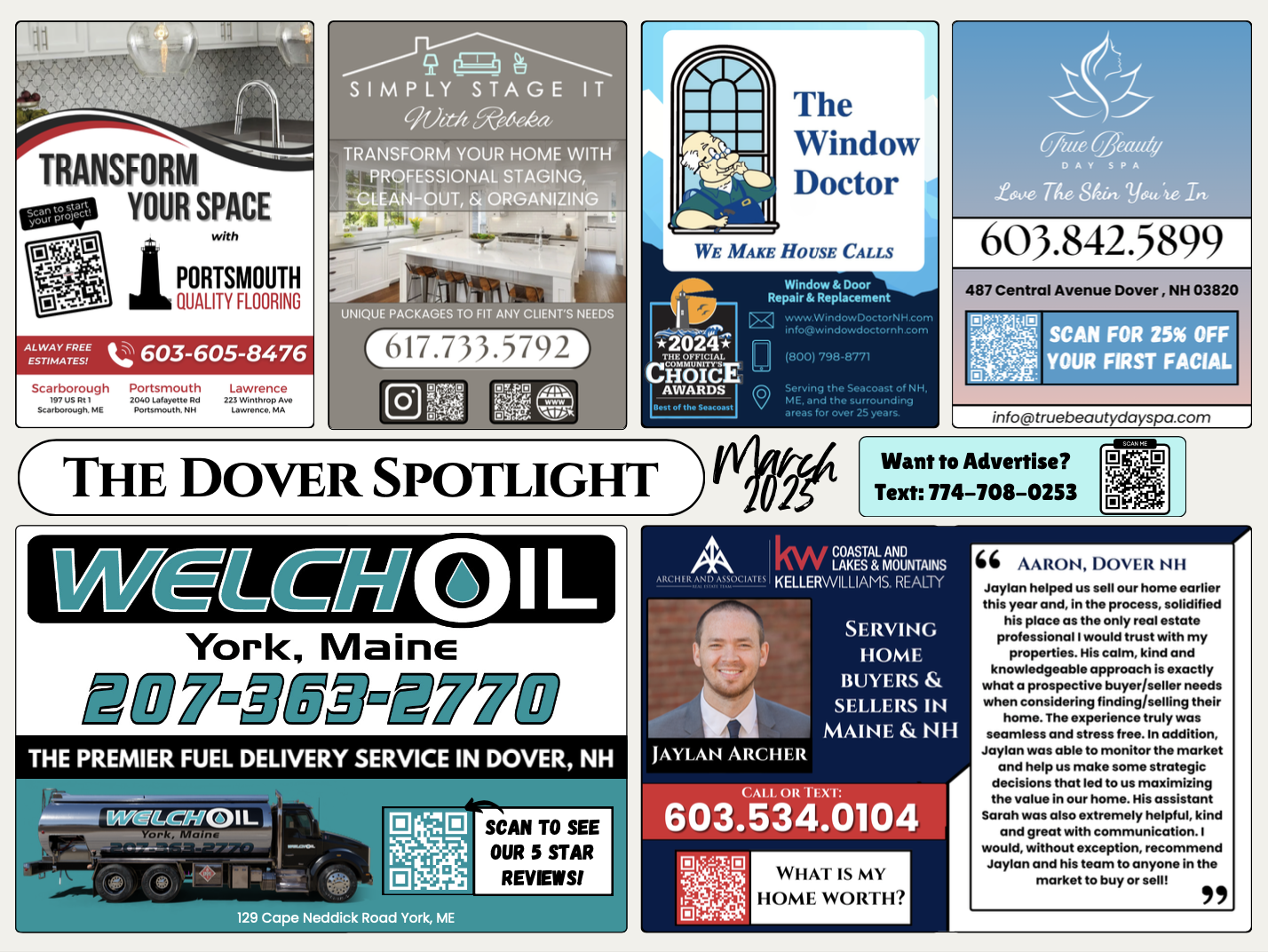
This is especially useful for door-to-door and cold email. You can drop your Spotlight link in the email signature or hand them a card with the URL. It answers the "who is this person?" question before they even ask it.
9x12 Sites — landing pages that actually make sense
Generic website builders are overkill for this business. You don't need a 15-page WordPress site. You need one page that says "here's what I do, here's proof, here's how to get on the next card."
9x12 Sites gives you exactly that — a clean landing page built for postcard operators. It includes:
- Your market area and card schedule — so prospects know when the next card drops
- Past card gallery — show your finished work (this is your portfolio)
- Advertiser testimonials — let your happy clients sell the next prospect for you
- Contact form — so interested businesses can reach out to you directly
- QR code landing destination — pair it with ScanLab so the QR code on your card points somewhere useful
You can have the page up in an afternoon. No coding, no design skills, no monthly agency retainer.
ScanLab — proof that your postcards actually work
Here's a problem every operator eventually runs into: an advertiser says, "How do I know anyone actually looked at my ad?"
ScanLab turns the QR code on your postcard into a tracking machine. When someone scans the code, ScanLab logs it — location, time, device. You get a dashboard showing exactly how many people engaged with each ad on the card.
This does two things:
ScanLab is a later-stage tool. You don't need it for card #1. But by card #3 or #4, when you're pitching renewals and trying to keep advertisers locked in month over month, the scan data becomes your best friend.
9x12 Method Printing — the whole fulfillment headache, gone
I saved this one for last because it's the newest and honestly the one that changed the business the most for our operators.
print.9x12method.com handles everything after the sale — print, package, and drop at USPS for EDDM delivery. Flat-rate pricing, no surprises.
| Card type | Cost | Homes mailed |
|---|---|---|
| 9x12 postcard | $2,900 | 5,000 |
| Community card (6"×11") | $1,400 | 2,500 |
Before this existed, operators had to find a local printer, negotiate pricing, figure out EDDM paperwork, bundle the cards, and physically drive them to the post office. Some still do, and that's totally fine. But most of our operators use the print service now because the math is predictable and they don't have to think about logistics.
Full transparency — you absolutely don't have to use it. I'm not going to pretend there's no other way. But the reason we built it is because operators kept asking for it. The fulfillment side was the biggest bottleneck, and removing it lets you focus on the only thing that actually makes money: selling slots.
How the tools connect — the actual workflow
Here's how a real operator uses these tools together, from zero to printed card:
- Step 1: Join the community. Watch the course. Get the scripts and templates. Understand the model before you start selling.
- Step 2: Pull leads with Lead Scout. Target 3–4 industries in your town. Load the contacts into the CRM.
- Step 3: Start outreach from the CRM. Email, call, or DM your way through the list. Track every conversation and set follow-up reminders.
- Step 4: Send prospects to your Spotlight page or 9x12 Site. When they ask "who are you?" — you have a real answer with a real link.
- Step 5: Fill the card and submit to Printing. Once all 16 slots are sold, upload the designs, pay the flat rate, and we handle the rest.
- Step 6: After it mails, pull ScanLab data. Show advertisers their scan numbers. Use the data to pitch renewals.
That's the loop. And then you do it again next month.
The beauty of this is that each tool handles one job. You're not logging into one giant app with 200 buttons. You're using the right tool for the right stage.
Which tools do you actually need to start?
Honestly? Two.
The community and the CRM. That's it.
The community gives you the playbook — the scripts, the templates, the course, the coaching. The CRM gives you the system to track your pipeline and follow up. Everything else you can layer in as you grow.
Here's what I'd recommend at each stage:
Don't go buy everything at once. That's not how this works. Get your first card sold. Then figure out what's slowing you down. Whatever that bottleneck is — leads, credibility, fulfillment, tracking — there's a tool for it. Add it when you need it, not before.
The "six disconnected apps" thing
Look, I know what some people say. "Mitch has six different tools and they're all separate." Fair criticism. I hear it.
Here's the honest truth: they are separate products. They're not one big monolithic platform with a single login. And there's a reason for that — each one was built to solve a specific problem as it came up, not designed in a boardroom as a "suite."
But here's what matters: they work together as a workflow, not as a platform. You don't need all six running simultaneously. You need the right ones at the right time. And every single one is optional. The business model works without any of them.
The postcard business itself is the product. The tools just remove friction.
Frequently Asked Questions
Do I need all the 9x12 method tools to get started?
No. Most operators start with just the community and the CRM. You can sell your first card with nothing but a phone, a spreadsheet, and a local printer. The tools save time and remove friction, but they're not required. Add them as you grow and hit specific bottlenecks.
How much do the 9x12 method tools cost altogether?
Each tool is priced separately and independently. The community is a monthly membership on Skool. The CRM, Lead Scout, Sites, and ScanLab each have their own pricing. Our Local Spotlight has a free pin option. You'll never be locked into buying a bundle — pick the ones you need and skip the ones you don't.
What's the difference between Our Local Spotlight and 9x12 Sites?
Our Local Spotlight is a directory — it's like your listing on a trusted platform, similar to having a Yelp page but for 9x12 operators. 9x12 Sites is your own standalone landing page that you control completely. Many operators use both — the Spotlight page for credibility and discovery, and a 9x12 Site as their "home base" link they send to prospects.
Can I use my own printer instead of 9x12 Method Printing?
Absolutely. Plenty of operators use local printers and do great. The print service at print.9x12method.com exists for operators who want flat-rate pricing and don't want to deal with the logistics — finding a printer, negotiating, bundling, driving to the post office. It's a convenience, not a requirement.
Does Lead Scout work for any area in the US?
Lead Scout pulls business data across the US. It works best in towns with 15,000–100,000 people — the same sweet spot that works best for the postcard business itself. You can filter by industry and radius to get exactly the types of businesses you want to target.
How does ScanLab help with advertiser renewals?
When an advertiser's QR code gets scanned, ScanLab logs it with a timestamp, location, and device type. At renewal time, instead of saying "trust me, the card worked," you can show them actual scan data — "your ad got 47 scans this month." Hard numbers make the renewal conversation dramatically easier.
The bottom line
Every tool I've built solves one problem. None of them are mandatory. All of them are optional. The business model — sell 16 slots on a 9x12 postcard, print it, mail it, keep the profit — works with or without any of this.
But if you're serious about scaling past card #1, having the right tools in place makes the difference between grinding and flowing. The community gives you the knowledge. The CRM gives you the system. Everything else is a multiplier.
Simple but not easy. The tools don't do the work for you. But they make the work a whole lot less annoying.
As always, I'm rooting for you. Keep winning.
Ready to start your 9x12 business?
Join the 9x12 Method community for scripts, templates, coaching calls, and a group that celebrates every win — even your first one.
Course + community included · Cancel anytime · Full transparency: you don't need this to start
More from the blog
Free vs Paid Direct Mail Software: Hidden Costs
Everybody loves free. Free CRM. Free lead finder. Free landing page builder. Free email tool. You Google "free direct mail software" and you get a page full of…
9x12 Sites: Build Your Business Website Fast
Most operators overthink their web presence. They spend weeks picking WordPress themes, fighting with plugins, trying to make their "About Us" page sound…
Lead Scout: Find Business Contacts Fast
If you've ever spent an entire afternoon Googling "plumbers near me," clicking through 40 websites, and copy-pasting emails into a spreadsheet one by one — you…